Bridging the Primary Care Gap: How PTs Can Proactively Build Referral Relationships
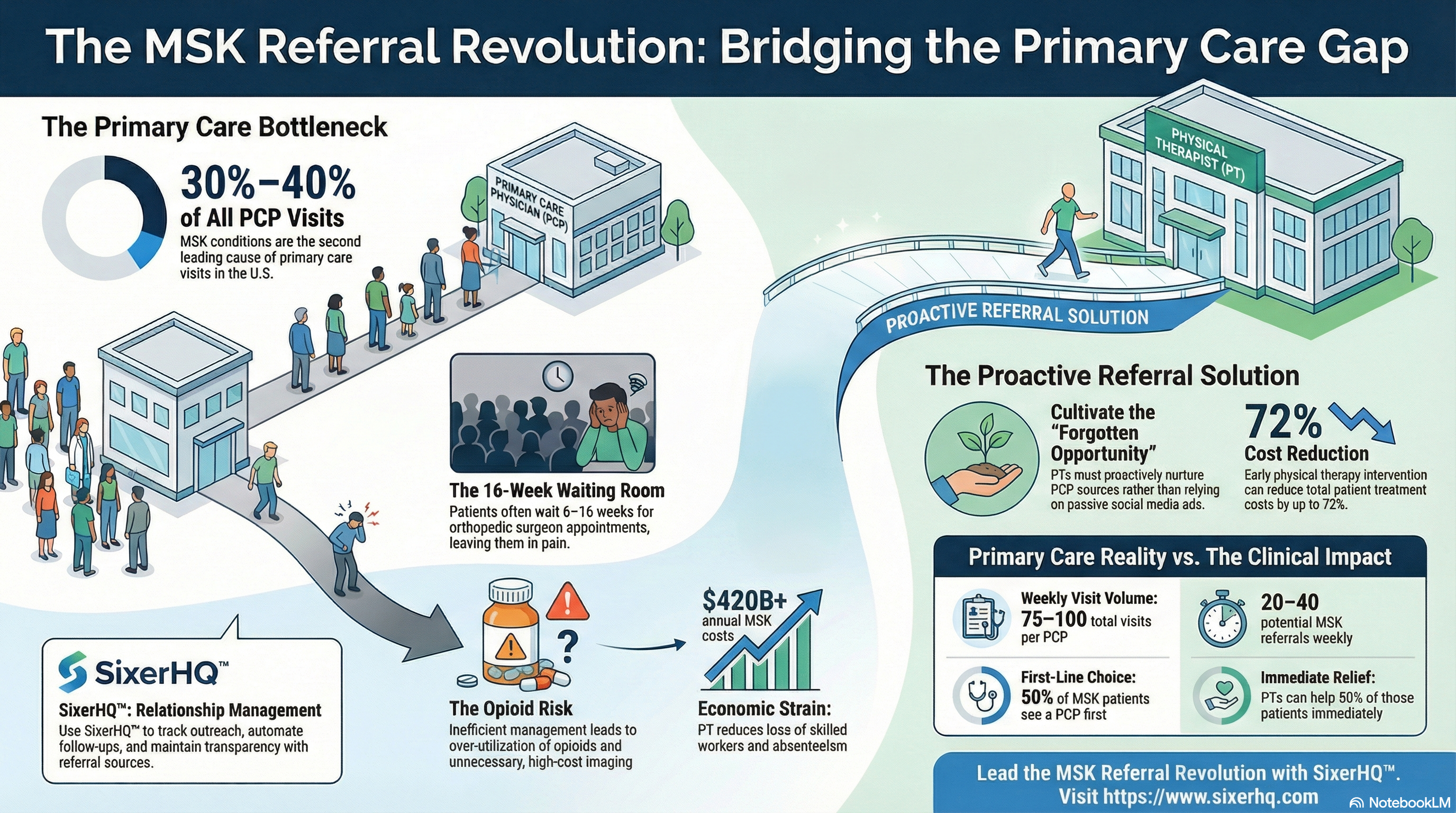
The Primary Care Bottleneck
Every week, primary care physicians across the United States see between 75 and 100 patients. Of those visits, a staggering 30–40% involve musculoskeletal complaints — making MSK conditions the second leading cause of primary care visits in the country.
Here's what that means in practical terms: every single PCP in your area is seeing 20–40 potential MSK referrals per week. These are patients with back pain, knee pain, shoulder injuries, post-surgical rehabilitation needs, and chronic musculoskeletal conditions. They're already in the healthcare system. They're already asking for help.
The question is: where are they being sent?
The 16-Week Waiting Room
For too many patients, the answer is an orthopedic surgeon's office — where they'll wait 6 to 16 weeks for an appointment, often in significant pain. During that wait, conditions can worsen, patients may turn to opioids for pain management, and the window for optimal conservative treatment narrows.
This bottleneck isn't just bad for patients — it's bad for the entire healthcare system. When patients wait months for surgical consultations that may ultimately recommend physical therapy anyway, everyone loses: the patient suffers longer, costs escalate, and physical therapists miss the opportunity to intervene early when their treatment is most effective.
The Opioid Risk and Economic Strain
Inefficient MSK management has consequences that extend far beyond individual patient outcomes.
The opioid connection is real. When patients can't access timely, appropriate musculoskeletal care, they're more likely to be prescribed opioids for pain management. This contributes to the broader opioid crisis and creates dependency risks that could have been avoided entirely with early physical therapy intervention.
The economic burden is massive. MSK conditions drive over $420 billion in annual healthcare costs, contribute to the loss of skilled workers through disability, and increase absenteeism across every industry. Physical therapy has been shown to reduce total patient treatment costs by up to 72% when used as a first-line intervention — but only if patients actually get referred.
The Proactive Referral Solution
This is where the opportunity lies for physical therapists. The patients exist. The clinical evidence supports PT as a first-line treatment. The economics favor early intervention. What's missing is the bridge between primary care and physical therapy — and that bridge is built on relationships.
Cultivate the "Forgotten Opportunity"
Most PT practices rely on passive referral strategies: a listing in the insurance directory, maybe a website, perhaps some social media posts. But passive strategies don't build the kind of trust and top-of-mind awareness that drives consistent referrals.
PTs must proactively nurture PCP sources rather than relying on passive social media ads. This means regular office visits to referring practices, lunch-and-learns with primary care teams, follow-up communications after every patient referral, and consistent relationship maintenance over time.
The Clinical Impact Is Your Best Sales Tool
When you're building relationships with primary care physicians, you don't need a sales pitch — you need data:
First-line choice: 50% of MSK patients see a PCP first. That means the PCP is the gatekeeper, and the relationship between your PT practice and that PCP determines whether patients find their way to you.
Immediate relief: PTs can help 50% of those patients immediately — providing same-week or next-week appointments compared to the 6–16 week surgical wait, with outcomes that frequently eliminate the need for surgery entirely.
Reduced imaging: Early PT intervention leads to 90% fewer MRIs and 74% fewer X-rays, saving the healthcare system money and sparing patients from unnecessary procedures.
These aren't abstract statistics — they're the talking points that resonate with every PCP who's frustrated by the current MSK referral pathway.
Building the System
Understanding the opportunity is one thing. Executing on it consistently is another. The physical therapy practices that succeed in building strong referral networks share a few characteristics:
They track everything. Every interaction with a referring provider — every office visit, phone call, email, and lunch meeting — is logged and visible to the entire team. No one has to wonder, "When did we last talk to Dr. Smith's office?"
They never let relationships go cold. Smart reminder systems alert the team when it's been too long since the last touchpoint with a key referral source. Relationships require consistent nurturing, and the practices that systematize this outperform those that rely on memory and good intentions.
They coordinate across their team. Marketing reps, clinic directors, and treating therapists all play a role in referral relationship management. The best practices ensure everyone is aligned — no duplicate visits, no missed follow-ups, no conflicting messages.
They follow up on every referral. When a PCP sends a patient, the referring physician should hear back about the outcome. This closes the loop, builds trust, and makes the PCP more likely to refer again.
SixerHQ™: Relationship Management for the MSK Referral Revolution
SixerHQ™ was built for exactly this challenge. It gives physical therapy practices and other healthcare specialists a purpose-built system to track outreach, automate follow-ups, and maintain transparency with referral sources.
Instead of scattered spreadsheets, sticky notes, and forgotten commitments, SixerHQ™ provides a single platform where your entire team can see every referral relationship, every interaction, and every upcoming touchpoint. Smart reminders ensure no relationship goes cold. AI-powered tools help draft outreach communications and suggest follow-up actions. Daily reminder emails keep your team focused on the relationships that matter most.
The MSK referral revolution isn't about working harder — it's about working smarter. The practices that build systematic, proactive referral relationships will be the ones that capture the massive opportunity sitting in primary care waiting rooms across the country.
The patients are already there. The question is whether they'll find their way to you.
Visit sixerhq.com to start building your referral relationship system today.
Ready to build your referral network?
SixerHQ™ helps healthcare specialists track, nurture, and grow the referral relationships that drive their practice.
Start Your Free Trial